
What Belongs in Every Contractor's Truck (Beyond the Obvious)
Not another "bring your tools" list. The stuff that lives in the truck permanently, organized by why it's there.
By Tom Reyes · September 5, 2026
Everyone knows to bring their tools. What separates a truck that's actually ready for whatever a job throws at it is the stuff that isn't job-specific: the consumables, the safety gear, and the small fixes for problems you didn't plan for. This is a reference for that layer, organized by category so you can check it against your own setup.
Fasteners and consumables
The category most likely to stall a job over something that costs almost nothing. A partial assortment of wood screws, self-tappers, wire nuts, zip ties, electrical tape, and whatever pipe dope/thread sealant your trade uses means a small surprise doesn't turn into a supply-house run mid-job.
- An assorted fastener organizer, not just whatever's left in the box from the last job
- Zip ties, several sizes
- Electrical tape and/or duct tape
- Thread sealant or pipe dope, if your trade touches any threaded fittings at all
- A tube of construction adhesive and a tube of silicone, both dry out, check the expiration and replace them before a job, not during one
Safety gear that lives in the truck, not just the job box
Job-specific PPE goes where the job is. This is the backup layer: the stuff you want available even on a job you didn't plan to need it on.
- A spare pair of safety glasses, the ones on your face are not always the only pair that gets damaged in a day
- Work gloves, a spare pair beyond your daily pair
- A basic first aid kit, actually stocked, not the half-empty one that's been in there for two years
- A fire extinguisher, rated for the work you actually do
- Hearing protection, if any part of your work involves grinding, hammering, or loud equipment even occasionally
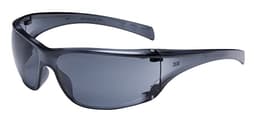
3M Virtua AP Safety Glasses
BestAnti-fog, anti-scratch coating and side shields for basic eye protection cheap enough to keep several pairs around.
$9.88
View on Amazon
Documentation and business essentials
Easy to forget because it isn't a physical tool, but it stops jobs just as effectively as a missing fastener does.
- A phone charger and car charger, a dead phone mid-job is a real problem when you need a part number, a customer callback, or a photo of a completed repair
- A notepad or a reliable digital equivalent for job notes, measurements, and customer signatures
- Business cards, if you're customer-facing at all
- A tape measure you trust, kept in the truck as backup even if you carry one on your belt
Emergency and "just in case" items
- Jumper cables or a portable jump starter
- A basic tire repair kit and a way to check tire pressure
- A flashlight or headlamp with fresh batteries, not the one that's been dying for three weeks
- A tarp or drop cloth, for weather or for protecting a customer's floor/furniture
- Work gloves and a change of shirt, for the job that goes messier than planned
Truck stock vs. job box: where to draw the line
Truck stock should be things you'd want available on almost any job in your trade, regardless of the specific work order. Job-specific materials and specialty tools belong in a job box or bag that gets packed per job, not permanently loaded, or your truck turns into an unorganized mess of stuff you're carrying around for a job you finished two months ago. If you haven't touched something in the truck bed in a month, it's job-box material, not truck stock.
The most commonly forgotten items
A pattern shows up across trades in what actually gets left behind: consumables that ran out and never got restocked (tape, sealant, fasteners), safety gear that's job-box-only instead of also living as a backup in the truck, and phone/device chargers, which sound trivial until a dead phone mid-diagnosis costs real time. None of these are exciting to restock. All of them are the difference between finishing a job clean and making an extra trip.
Pro tip
Do a five-minute truck restock at the end of each week, not the start of the next job. Whatever ran low goes on a list before you forget, and you start Monday with a truck that's actually ready instead of finding the gap mid-job.
Relevant tools
Related reading

The Tools Worth Spending Real Money On
More expensive isn't automatically better. But in a handful of categories, the price gap is buying something real. Here's how to tell which is which.
By Tom Reyes

5 Tools You Should Never Cheap Out On (And What Actually Goes Wrong When You Do)
Not a general "buy quality" lecture. Five specific categories where the cheap version fails at the exact moment it matters most.
By Tom Reyes