
5 Tools You Should Never Cheap Out On (And What Actually Goes Wrong When You Do)
Not a general "buy quality" lecture. Five specific categories where the cheap version fails at the exact moment it matters most.
By Tom Reyes · September 5, 2026
Most tools, cheap or expensive, do the same job most of the time. That's exactly what makes the exceptions dangerous: you can run a cheap version of these five for weeks without noticing anything wrong, right up until the one time it matters, and by then it's too late to have bought the better version.
1. Voltage and CAT-rated test equipment
A hardware-store multimeter and a real CAT-rated one will both correctly read a dead, de-energized circuit. Where they diverge is on the circuit that wasn't actually dead, or the panel with a fault behind the cover. CAT ratings describe how much transient overvoltage a meter can absorb before the internal protection fails, and an unrated or CAT II meter used on CAT III/IV work isn't a theoretical risk, it's the meter (and the hand holding it) taking a transient it wasn't built to survive. This is one of the few tools on this list where "it worked fine every other time" tells you nothing about whether it'll work the one time it counts.
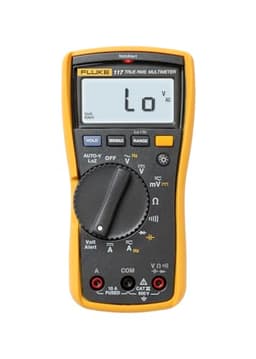
Fluke 117 Digital Multimeter
BestTrue-RMS multimeter with non-contact voltage detection, built for daily commercial/residential electrical work.
$239.32
View on Amazon
2. Real eye and face protection
Genuine ANSI Z87.1-rated safety glasses are impact-tested at a real velocity standard. Glasses without that rating, even ones that look identical, aren't held to that same standard and can craze, crack, or fail on an impact a rated pair would have stopped. Same logic applies to a welding helmet's auto-darkening sensor speed: a slow or unreliable sensor means a real, if brief, flash of unprotected UV/IR exposure on every strike, not a hypothetical one. Your eyes don't get a warning shot before the damage from either of these is permanent.
3. Anything with a calibrated number on it
A torque wrench, a set of calipers, a manifold gauge set, a scale. These tools exist to replace a guess with a number you can act on with confidence. A cheap torque wrench that's drifted 15% out of true doesn't announce itself, it just quietly under- or over-torques every fastener you touch with it until something fails or a warranty claim traces back to it. The failure mode of a bad measuring tool is silent, which is exactly what makes it worse than a tool that just breaks outright.
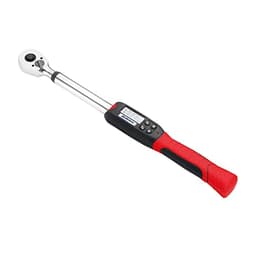
ACDelco ARM601-4 Digital Torque Wrench
Best1/2" drive digital torque wrench (14.8-147.5 ft-lb) with a buzzer and LED at the preset torque, ISO-calibrated.
$99.95
View on Amazon
4. Ladders and fall-related equipment
A ladder's duty rating isn't a suggestion, it's a tested load limit, and a cheap ladder that's rated lower than it's actually used for, or that's structurally compromised from age and cheap materials, fails without warning under load. This is the category where "it's held up fine so far" is the least reassuring sentence possible, because ladder failures are almost always sudden, not gradual.
5. Your primary work boots
Not the most exciting item on this list, but arguably the one you'll regret cheaping out on the fastest. A genuine steel or composite toe rated to ASTM standards protects against a specific impact and compression force; an unrated "work-style" boot that looks the part offers none of that certified protection. Beyond the toe cap, cheap boots also break down faster under daily wear, and worn-out tread or a collapsed footbed on a job site with uneven footing or ladder work is its own injury risk that compounds the longer you put off replacing them.
The pattern across all five
None of these fail more often when they're cheap. They fail exactly as often as any tool fails, rarely. The difference is what happens on that rare occasion: a cheap version of these five puts you, or your work, directly in the path of that failure. Everything else on a tool list, you can safely buy mid-tier and upgrade later.
The honest answer
This isn't a case for buying premium across the board, most tools genuinely don't need it. It's a case for knowing which five categories are actually different, and treating those five as the exception to an otherwise reasonable "buy mid-tier and upgrade later" strategy.
Relevant tools
Related reading

Tool Mistakes That Cost Apprentices Money (And How to Avoid Them)
Not which tools to buy, but how apprentices actually lose money on tools they didn't need, in an order they didn't need to buy them in.
By Tom Reyes

The Tools Worth Spending Real Money On
More expensive isn't automatically better. But in a handful of categories, the price gap is buying something real. Here's how to tell which is which.
By Tom Reyes