
The Tools Worth Spending Real Money On
More expensive isn't automatically better. But in a handful of categories, the price gap is buying something real. Here's how to tell which is which.
By Tom Reyes · September 5, 2026
Every trade has a version of the same argument: does the $300 version actually do the job better than the $80 one, or are you just paying for a logo? The honest answer is that it depends entirely on what's different between them, and that's the part most buying advice skips. Here's the actual rule: spend more when the price gap is buying accuracy, durability under daily abuse, or your own safety. Save money everywhere else.
Spend more here: safety equipment
This isn't a values statement, it's a practical one. Cheap eye protection that isn't genuinely rated ANSI Z87.1 can crack or fail under impact in exactly the moment it exists to protect you. A knockoff welding helmet with a slow or unreliable auto-darkening sensor means unprotected exposure for a fraction of a second on every single strike, and that adds up over a career. Insulated tools without a real CAT rating are the difference between a meter absorbing a transient spike and one that doesn't. None of this is marketing. It's the one category where the price difference is frequently buying a real engineering and materials difference, not a brand premium.
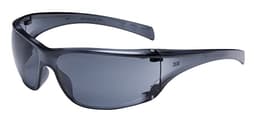
3M Virtua AP Safety Glasses
BestAnti-fog, anti-scratch coating and side shields for basic eye protection cheap enough to keep several pairs around.
$9.88
View on Amazon
Spend more here: anything that measures
A multimeter, a torque wrench, a set of calipers, a manifold gauge set, these tools exist to give you a number you're going to act on. If that number is wrong, you don't find out until later, usually in the form of a comeback, a warped part, or worse. A cheap torque wrench that drifts out of calibration silently is more dangerous than an obviously broken one, because you keep trusting a number that's no longer true. This is the category where paying for a name brand with a real calibration and tolerance spec is buying something you can't see: confidence in the number on the dial.
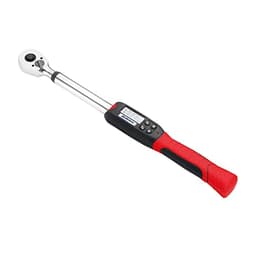
ACDelco ARM601-4 Digital Torque Wrench
Best1/2" drive digital torque wrench (14.8-147.5 ft-lb) with a buzzer and LED at the preset torque, ISO-calibrated.
$99.95
View on Amazon
Spend more here: your primary daily-driver tool
Whatever tool you personally pick up the most times in a day, your main drill, your primary impact driver, your everyday hand tool, is worth buying into a real cordless platform for rather than a bargain-bin one-off. This isn't really about that one tool's build quality, it's about the battery ecosystem you're committing to. Every future cordless purchase in that category will pull toward whatever platform you already own batteries for. Buying cheap here doesn't just risk one bad tool, it locks you into an ecosystem with a thinner lineup and worse parts availability for years.
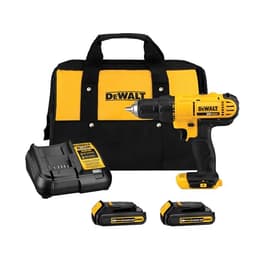
DEWALT DCD771C2 20V Max Cordless Drill Driver Kit
BestCompact drill/driver with two batteries and a charger, a solid do-everything drill for a maintenance cart.
$119.00
View on Amazon
A real example of where this plays out
Two techs each replace a set of head bolts on the same engine. One uses a $25 clicker-style torque wrench that's never been checked against a reference since it left the factory. The other uses a name-brand wrench with a real calibration certificate. Both wrenches click at what feels like the same point. Only one of them is actually clicking at spec. If the cheap one has drifted even a modest percentage out of true, and consumer-grade clicker wrenches routinely do over time with regular use, that's a head gasket job with fasteners torqued incorrectly, and the tech has no way of knowing until something fails, often much later and somewhere else in the diagnostic chain. That's the entire argument for spending more on measuring tools in one story: not that the cheap one broke, but that it didn't, and kept quietly lying anyway.
Where the extra money mostly isn't buying anything
Basic hand tools that don't measure anything and don't touch your body directly, pliers, wire brushes, chalk lines, basic screwdrivers, a second or third set of sockets, are where premium pricing buys diminishing returns fastest. A mid-tier wrench and a top-shelf wrench from a reputable brand will both turn the same bolt correctly for years. The gap that matters in this category is between genuinely cheap, disposable tools and mid-tier ones, not between mid-tier and premium.
| Category | Worth paying more | Why |
|---|---|---|
| Eye/face/hearing protection | Yes | Real ANSI ratings and reaction speed, not marketing |
| Anything with a number on a dial or screen | Yes | You're trusting that number to make decisions |
| Your main daily-driver power tool | Yes | You're really buying into a battery platform, not just one tool |
| Basic non-measuring hand tools | Rarely | Mid-tier and premium both do the job for years |
| Storage (boxes, bags, carts) | Sometimes | Buy for how much you actually own today, not an imagined future kit |
The test to run before any purchase
Ask: does this tool give me a number I'll act on, does it stand between me and an injury, or is it the tool I'll reach for the most? If yes to any of those, spending more is buying something real. If no, you're probably paying for a name.
What this looks like across a full kit
Applied to a whole first-year tool kit rather than one purchase at a time, this rule reshapes the budget in a specific way: instead of spreading a fixed amount evenly across every category, it concentrates spending in the three categories above and spends deliberately less everywhere else. A kit built this way often costs less overall than one built by buying "good enough" versions of everything evenly, because the categories that don't need premium pricing are usually the majority of a kit by item count, even though they're a minority of what actually matters.
The honest answer
"Buy the best you can afford" is bad advice applied evenly across every tool in a kit, it'll bankrupt an apprentice for no real benefit on half of what they buy. "Spend where the number matters, save where it doesn't" gets you a genuinely good kit for a fraction of what buying premium across the board would cost, without ever putting you in a position where a cheap tool failed at the exact moment it mattered.
Relevant tools
Related reading

5 Tools You Should Never Cheap Out On (And What Actually Goes Wrong When You Do)
Not a general "buy quality" lecture. Five specific categories where the cheap version fails at the exact moment it matters most.
By Tom Reyes

Tool Mistakes That Cost Apprentices Money (And How to Avoid Them)
Not which tools to buy, but how apprentices actually lose money on tools they didn't need, in an order they didn't need to buy them in.
By Tom Reyes