
Cordless Finally Caught Up to Pneumatic
Brushless motors and high-output batteries closed most of the gap. They didn't close all of it, and the part that's left matters if you're on your feet all day.
By Tom Reyes · September 5, 2026
For most of the last few decades, the answer to "cordless or air" for a real shop impact wrench was easy: air, every time. A compressor never runs out of charge, air tools are light, and pneumatic impacts have always hit harder for the money. That gap has genuinely narrowed. It hasn't closed.
Where cordless actually won
Brushless motors and high-output battery packs pushed premium 1/2" cordless impacts past 1,000 ft-lb of breakaway torque, which used to be air-tool territory. For field work, mobile repair, or anything away from a compressor line, that's not a close call anymore: a cordless impact with a couple of charged batteries does real work with zero setup, no hose to drag, and no compressor cycling in the background.
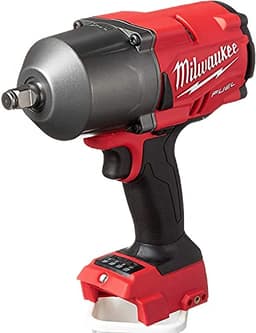
Milwaukee 2767-20 M18 Fuel High Torque 1/2" Impact Wrench
Cordless high-torque impact wrench for lug nuts and stuck fasteners; bare tool for shops already on the M18 battery platform.
$269.99
View on Amazon
Where air still wins, and why
The gap that's left shows up on sustained, repetitive work, not the first bolt. An air impact wrench pulls consistent torque from the first fastener to the five-hundredth because it's fed by a compressor, not a cell that's discharging. A cordless impact's torque output tapers as the battery drains through a long shift of wheel-offs or big fastener runs; you'll feel it slow down well before the pack reads empty.
Weight matters too. A pneumatic 1/2" impact putting out 1,000 ft-lb runs around 4 lbs. A cordless unit with comparable output, plus the battery, is commonly 6 to 8 lbs. That 2 to 4 lb difference doesn't feel like much for one bolt. Over an 8-hour shift of wheel-offs, it's the difference your wrist and shoulder actually notice by the end of the day.
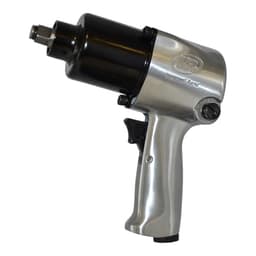
Ingersoll Rand 231C 1/2" Drive Air Impact Wrench
Best600 ft-lb air impact wrench for heavy fasteners on trucks and trailers, still the standard on shop air lines.
$124.99
View on Amazon
| Pneumatic | Cordless | |
|---|---|---|
| Torque consistency across a long shift | Constant, fed by compressor | Tapers as the battery drains |
| Weight (comparable output) | ~4 lb | ~6-8 lb with battery |
| Setup | Needs a compressor and hose run | None, grab and go |
| Best for | Fixed shop, high-volume work | Field service, mobile, occasional heavy use |
What this means for you
Working out of a fixed bay doing volume work all day, tire shop, fleet service, production line? Air still has the edge on sustained output and weight. Doing mobile repair, occasional heavy fasteners, or work away from a compressor? Cordless has closed the gap enough that the convenience wins outright.
The part that doesn't get talked about: battery platform lock-in
Going cordless isn't really a tool decision anymore, it's a battery platform decision. Once you own a stack of batteries and chargers for one brand's ecosystem, every future cordless tool purchase gets pulled toward that same brand, whether or not it's actually the best tool in that category. That's worth thinking about before buying the first cordless impact, not after you've got six batteries for a platform you're stuck with.
The honest answer
Cordless didn't beat pneumatic. It got good enough that for a lot of real-world work, the extra convenience outweighs pneumatic's remaining edge in raw sustained output and weight. If your day looks like nonstop heavy-duty fastener work in one spot, keep the air line. If it looks like moving between jobs, cordless is no longer the compromise it used to be.
Related reading

Is a $400 Multimeter Actually Better Than a $100 One?
The difference isn't accuracy. It's what happens the one time you're wrong about which wire is hot.
By Tom Reyes

The Tools Worth Spending Real Money On
More expensive isn't automatically better. But in a handful of categories, the price gap is buying something real. Here's how to tell which is which.
By Tom Reyes